A Guide To Fun & Healthy Outdoor Learning Experiences For Children
Outdoor play offers children more than just fresh air and exercise — it’s a powerful classroom where curiosity, problem-solving, and social skills grow naturally. Below are ideas and practical examples of outdoor learning experiences that support development across ages, from toddlers to elementary-aged children.
Why outdoor learning matters
Sensory-rich environment: Nature stimulates touch, sight, sound, smell and even taste in safe, guided ways.
Physical development: Climbing, running, balancing and digging build motor skills and coordination.
Cognitive gains: Outdoor activities promote observation, hypothesis testing, and creativity.
Social-emotional benefits: Cooperative games and shared discovery build communication, patience, and empathy.
Connection to the environment: Early experiences outside encourage stewardship and curiosity about the natural world.
Practical outdoor learning experiences and examples
Nature Scavenger Hunt
Age range: 2–10 years (adapt difficulty)
What to do: Create a list or picture cards showing items to find (leaf of a certain shape, smooth rock, feather, dandelion, insect). Children search, collect, or photograph finds.
Learning outcomes: Observation skills, vocabulary (leaf, petal, stem), classification, counting.
Variation: Make it seasonal (fall leaves, spring flowers) or theme-based (colors, textures, shapes).
Outdoor Science Experiments
Age range: 3–12 years
What to do: Simple, safe experiments like sink-or-float with natural objects, soil erosion demo using a watering can on slopes, or “weather station” measuring rainfall, wind direction, and temperature.
Learning outcomes: Hypothesis testing, measurement, cause-and-effect, basic scientific method.
Example: Build a DIY rain gauge (clear container marked with measurements). Track rainfall across weeks and graph results.
Garden-Based Learning
Age range: 2–12 years
What to do: Planting seeds, tending a vegetable or pollinator garden, composting food scraps, and harvesting produce.
Learning outcomes: Life cycles, responsibility, nutrition, math (measuring soil, counting seeds), ecology (pollinators, soil health).
Example: Plant fast-growing beans in clear cups so children can see roots developing. Record growth in a class journal.
Loose Parts Play
Age range: 1–8 years
What to do: Provide open-ended materials (sticks, stones, shells, crates, ropes, leaves) for building, sorting, and imaginative play.
Learning outcomes: Creativity, engineering basics, problem-solving, fine and gross motor development.
Safety note: Supervise small parts for young children and ensure materials are clean and safe.
Outdoor Story-time and Dramatic Play
Age range: 2–8 years
What to do: Read books outdoors, then encourage children to act out scenes using natural props (sticks as wands, leaves as costumes).
Learning outcomes: Language, comprehension, sequencing, expressive skills, cooperative play.
Example: After reading a story about animals, hold a “habitat parade” where children create and demonstrate how each animal moves and behaves.
Math in the Yard
Age range: 3–10 years
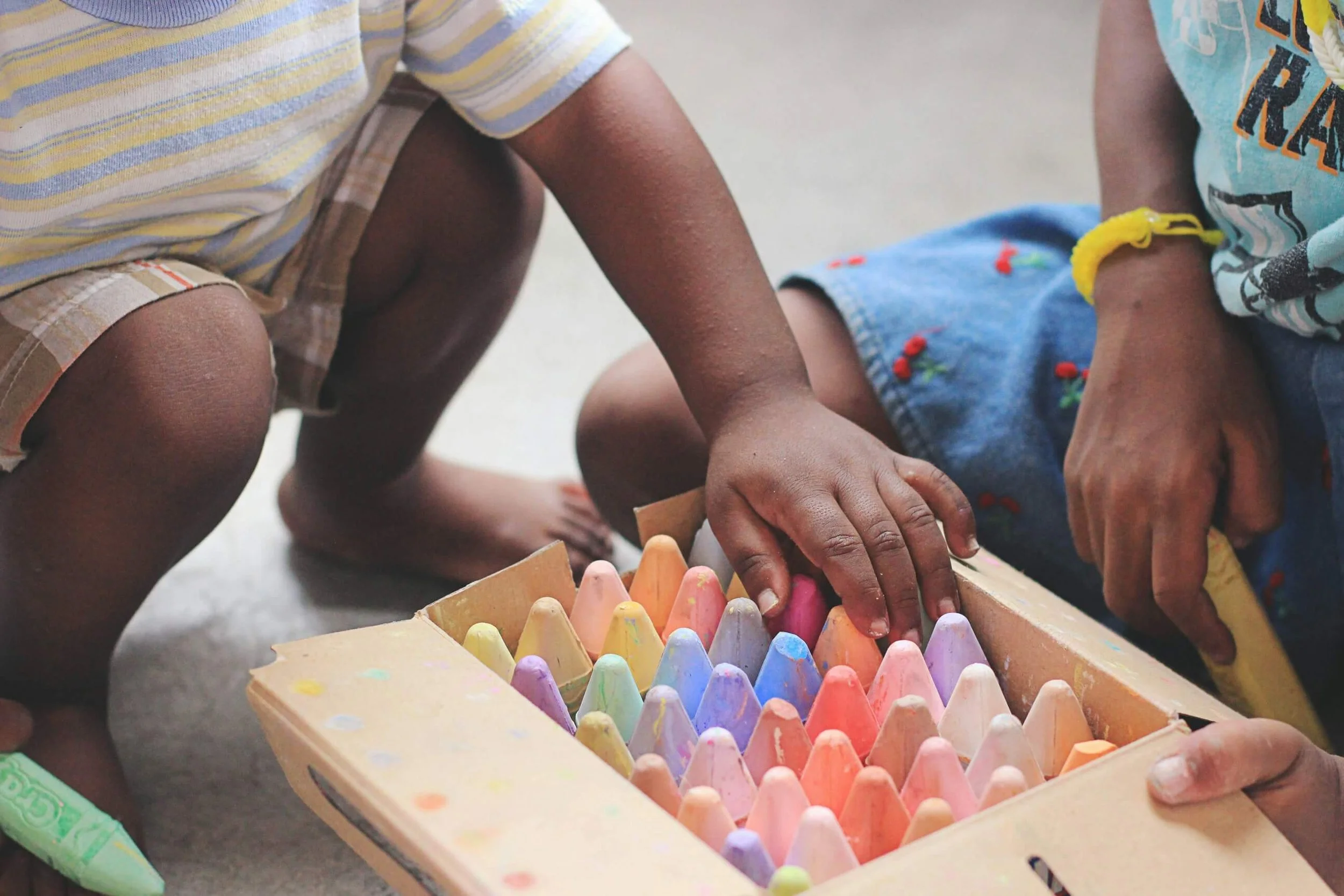
What to do: Use sidewalk chalk, sticks, or stones to create number lines, shape hunts, measurement stations (how many big steps across the sandbox?), and pattern-making.
Learning outcomes: Number sense, spatial reasoning, measurement, pattern recognition.
Example: Lay out a hopscotch with fractions (1/2, 1/4) for older children to practice fraction concepts kinesthetically.
Bug and Wildlife Observations
Age range: 3–12 years
What to do: Give children magnifying lenses or bug viewers to observe insects, birds, or pond life; keep observation journals with drawings.
Learning outcomes: Scientific observation, taxonomy basics, patience, empathy for living things.
Variation: Set up a simple bird feeder and chart visits by species and times.
Outdoor Art and Nature Crafts
Age range: 2–12 years
What to do: Use natural materials for collage, leaf rubbings, bark prints, or ephemeral art that’s left in place to decompose.
Learning outcomes: Fine motor skills, aesthetics, understanding materials, environmental respect.
Example: Make mandalas from leaves, stones, and flowers to discuss symmetry and patterns.
Movement and Obstacle Courses
Age range: 2–12 years
What to do: Design courses that require crawling, balancing, hopping, and following directions. Use logs, cones, ropes, and planks.
Learning outcomes: Gross motor skills, sequencing, following multi-step directions, teamwork.